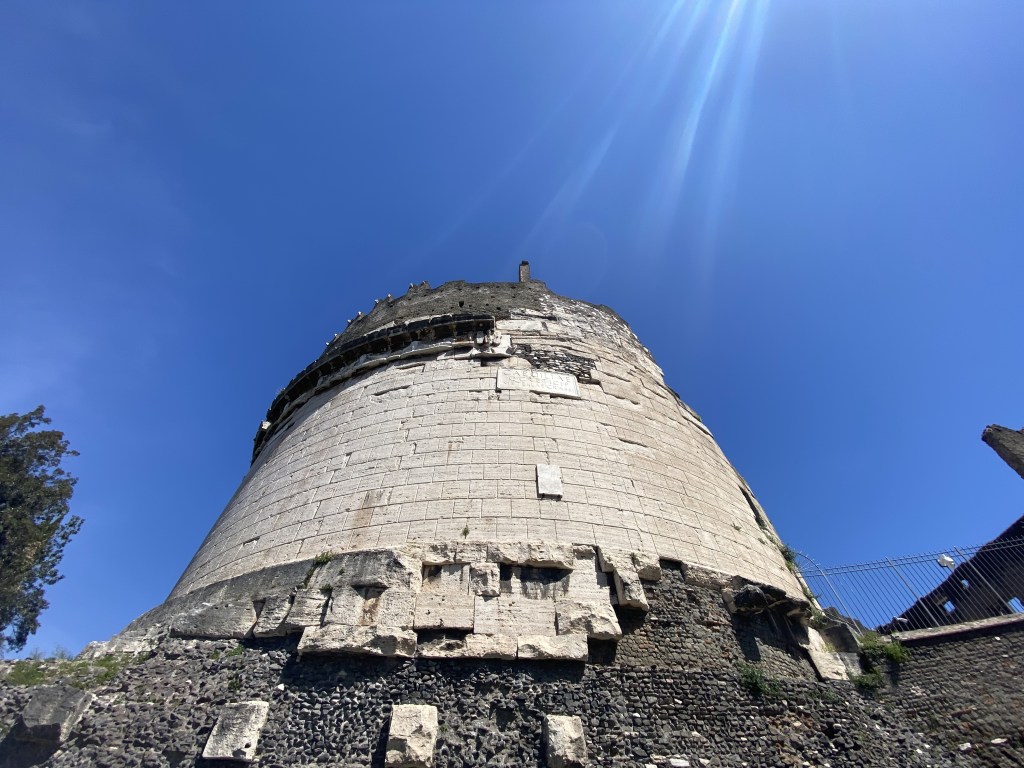
A recent excursion provided me with the opportunity to explore the historic Appian Way in Rome amidst the captivating ambiance of a spring day. The initial encounter was with the Castrum Caetani, a prominent monument previously observed only from exterior perspectives, now unveiled in its interior grandeur for the first time.
The journey proved immensely enriching, unfolding within one of Rome’s most quintessential locales, resonating with the echoes of its storied past and the sprawling expanse of the thoroughfare extending to Brindisi. Technological innovations played a pivotal role in enhancing the visitor’s experience, commencing from the threshold of the architectural marvel housing the tomb, where the holographic depiction of Caecilia Metella delineated her narrative, chronicling the evolution of her sepulcher over time. The engrossed countenances of the youthful audience bore witness to a novel mode of archaeological discourse, characterized by its accessibility, albeit subject to potential critique for its apparent narrative simplicity, yet undeniably effective in engaging a diverse spectrum of enthusiasts.
Venturing further into subterranean realms, the interplay of illumination and visual projections facilitated a deeper comprehension of the ever-evolving landscape and anthropogenic alterations within the Capo di Bove vicinity, spanning from ancient lava flows to the auspicious tenure of Boniface VIII, who oversaw the erection of the Castrum.
As daylight beckoned, bidding farewell to the subterranean depths seemed almost regrettable, yearning to emerge once more into the vast expanse of open skies. Despite the constraints imposed by the bustling crowds on the chosen day, the opportunity to delve into the realm of virtual reality with Oculus Quest remained elusive. Yet, such circumstances merely serve as impetus for future returns to the hallowed paths of the Appian Way.
 Alessandro Sebastiani
Lascia un commento