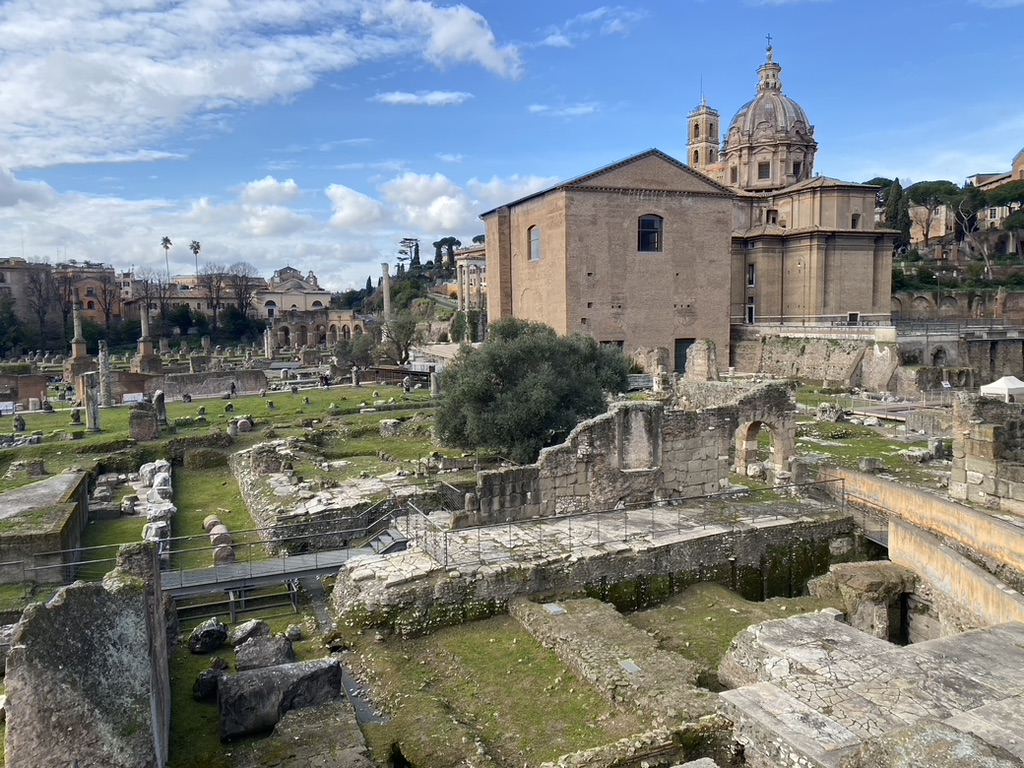
When I began my journey at the University of Siena in 2000, the path towards my thesis remained uncertain. For three years prior, I excavated alongside a research group in Castel di Pietra, spending my last summers as a teenager amidst the remnants of ancient rooms, painstakingly removing contexts of rubble and collapse.
A pivotal shift occurred in 2003 when I joined another research group. It was then that I made the decisive choice to center my thesis on the study of late antique and early medieval residential architecture within Italian cities. Despite the vast expanse of my research, encapsulated within five volumes and exceeding 3,500 pages, I consistently distill its essence to the embodiment of the casa solariata within the Forum of Nerva in Rome. Here lies a microcosm wherein the entire cultural metamorphosis of residential architecture, spanning from the late 8th to the early 9th century, is vividly elucidated.
Each stone was meticulously repurposed, every brick meticulously arranged upon the first floor, and the vegetable gardens enveloping the dwelling all intersected with the monumental remains of the square inaugurated by Nerva. These are the notorious discoveries unearthed by erudite archaeologists driven by historical breadth and a profound exploration of its verticality.
Strolling along the Via dei Fori Imperiali, I cannot help but gaze downward toward those ancient walls. They resonate with a profound sentimentality, offering a glimpse into the hearts of those who, with humble reverence, seek to unravel the enigmatic tapestry of Rome’s secrets.
 Alessandro Sebastiani
Lascia un commento