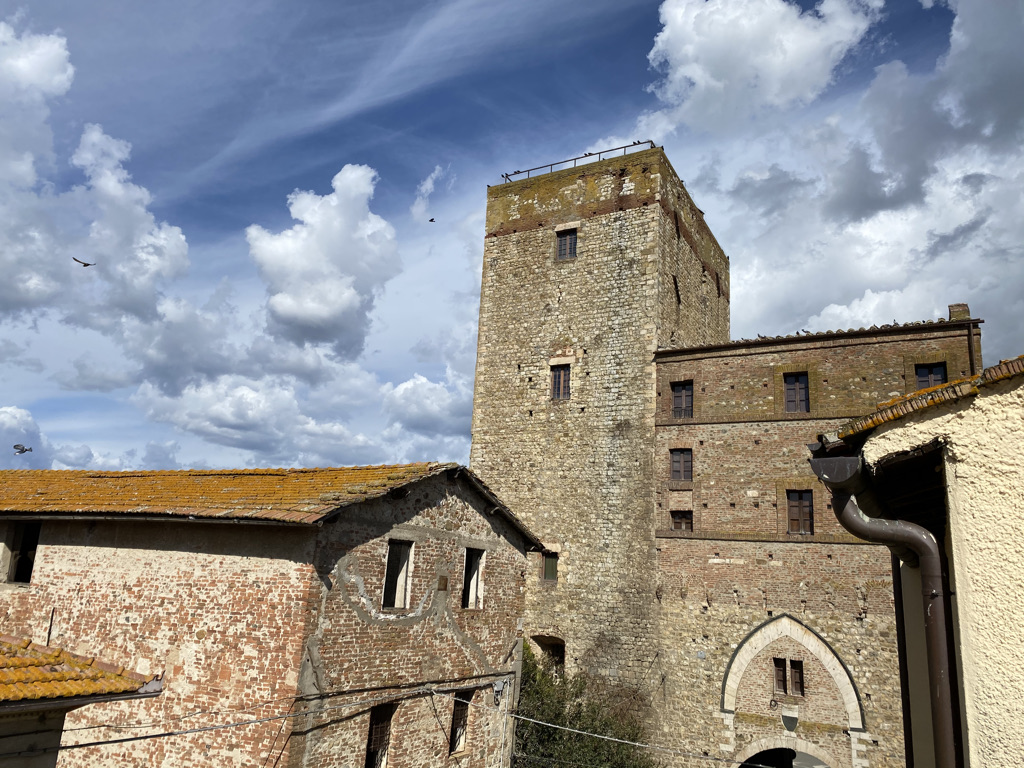
Since 2017, Paganico’s historical narrative has become closely intertwined with the research initiative under my direction. Previously, my traversal of Paganico en route to Monte Amiata was merely transitory, devoid of extended pauses. However, recent years have witnessed a notable transformation. The excavation efforts at Castellaraccio afford us a nuanced comprehension of the fortified village’s abandonment juxtaposed with the emergence of the borgo franco, followed by its trajectory through the Renaissance period. Notably, the church located in the town square serves as a pictoresque niche of some of the region’s most exquisite medieval frescoes, while the remarkably well-preserved defensive wall circuit stands as a formidable counterpart to that of Buonconvento.
In 2021, a milestone was achieved with the development of a multimedia tour tailored for tourists. This endeavor involved a meticulous philological reconstruction of the settlement’s historical periods, coupled with the use of augmented reality to digitally reconstruct the city gates and the collapsed segments of walls facing the Ombrone River. This immersive experience remains accessible today, facilitated by the strategic placement of QR codes on panels dispersed throughout peculiar places in Paganico.
Moreover, the excavation endeavors in Podere Cannicci, coupled with the identification of a vicus, offer a promising avenue for probing beneath Paganico’s soil in pursuit of remnants from the classical period. This critical juncture in our research trajectory underscores our commitment to crafting a comprehensive narrative chronicling the historical palimpsest of this region nestled within the middle valley of the Ombrone River.
 Alessandro Sebastiani
Lascia un commento