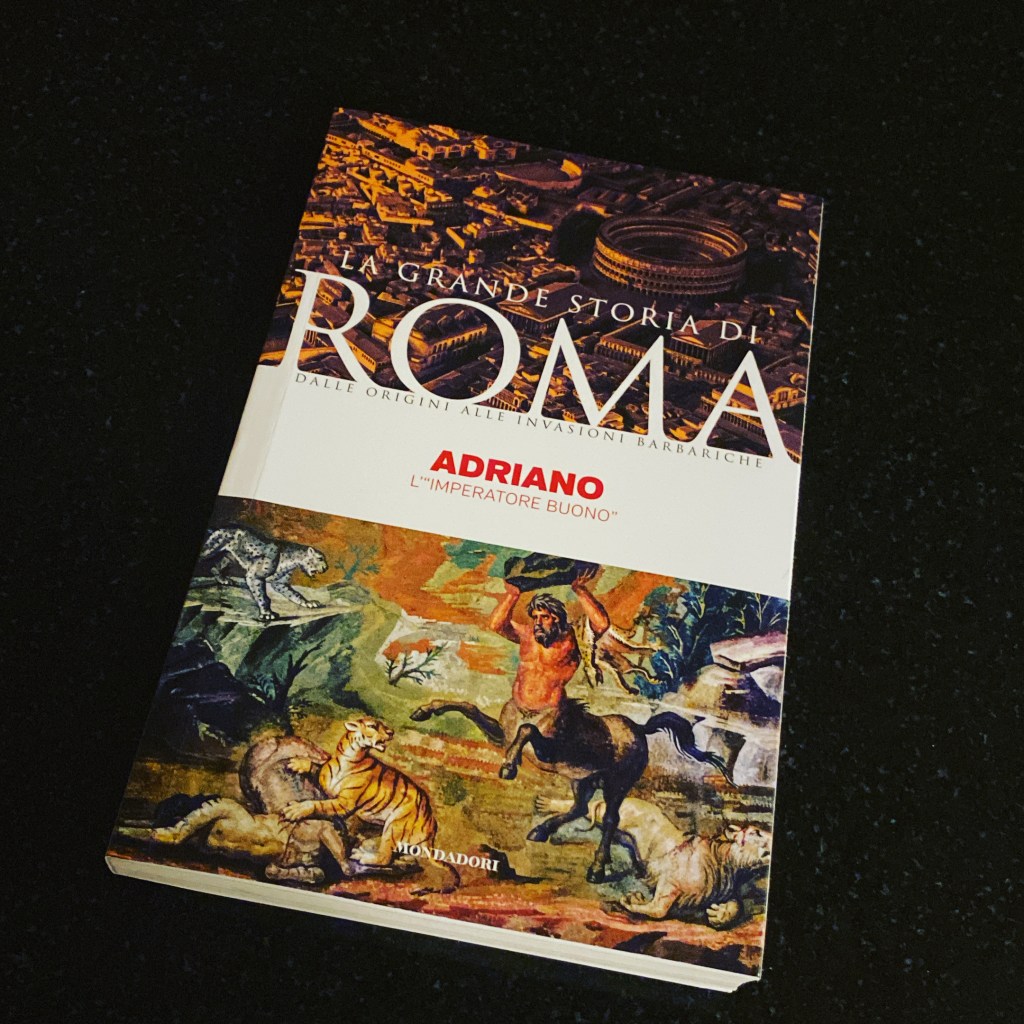
In the vast expanse of Roman history, few figures stand out quite like Emperor Hadrian. Known as a ruler who balanced power with philosophy, military prowess with a passion for the arts, Hadrian’s legacy has been celebrated for centuries. My book Adriano: L’Imperatore buono offers a refreshing and insightful take on this iconic emperor, delving deep into the nuances of his reign and the qualities that earned him the title of “the good emperor.”
Here, Hadrian’s life is reconstructed, not just as an emperor but as a man shaped by his times, his experiences, and his personal relationships. The focus is on Hadrian’s character and his approach to leadership, which was deeply influenced by his philosophical inclinations and genuine concern for the well-being of his subjects.
The volume paints a portrait of a ruler interested in the mechanics of governance and the broader philosophical questions underpinning his policies. This aspect of Hadrian’s reign is often overshadowed by his military achievements and monumental building projects. Still, the book brings it to the forefront, offering readers a more rounded and humanized view of the emperor.
The title “L’Imperatore Buono” reflects Hadrian’s reputation for fairness and his efforts to consolidate the empire through diplomacy rather than conquest. The manuscript highlights Hadrian’s legal reforms, his travels across the empire, and his initiatives to improve the lives of ordinary citizens. These actions are presented as political strategies and reflections of Hadrian’s moral compass.
While rooted in rigorous scholarship, the volume is also broadly accessible. Historical analysis weaves with engaging storytelling, making Adriano: L’Imperatore Buono a compelling read for both history enthusiasts and general readers alike. The book is rich with details about Hadrian’s personal life, his relationships with key figures like Antinous, and his influence on Roman culture, all of which are presented in a way that feels both informative and relatable.
 Alessandro Sebastiani
Lascia un commento