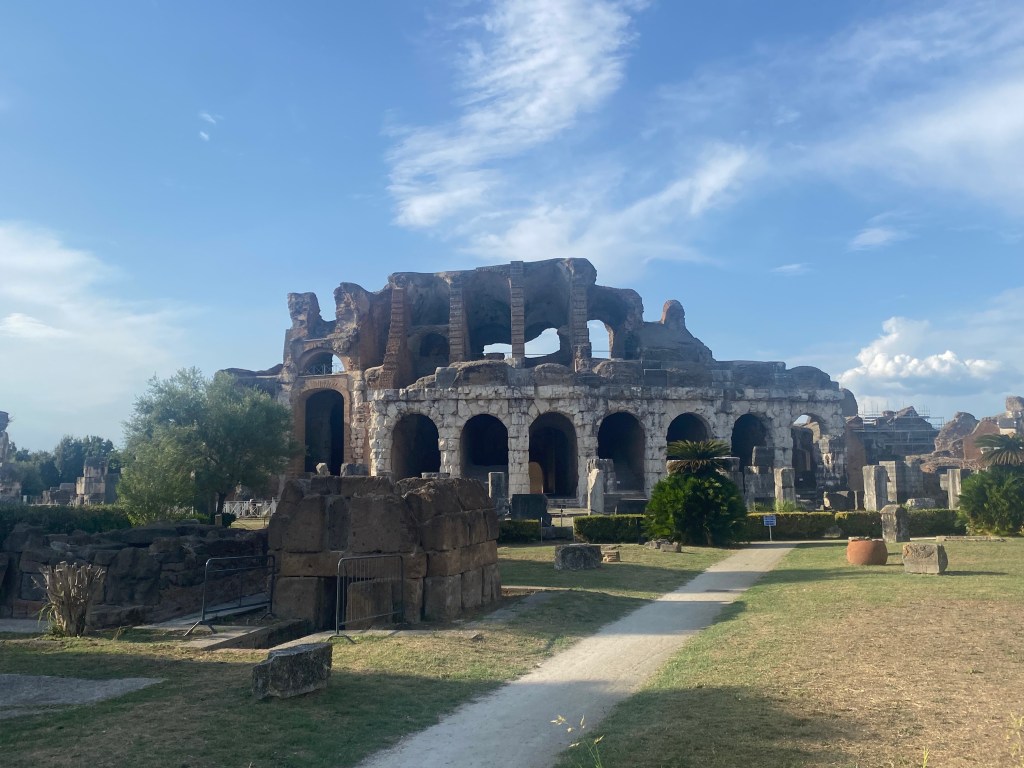
My first encounter with the amphitheater at Santa Maria Capua Vetere was serendipitous, coinciding with a trip to a conference nearby. Wandering through the ancient ruins, I was immediately struck by the sheer scale and the palpable sense of history that enveloped the site. Standing in the arena, it was impossible not to imagine the roaring crowds and the dramatic spectacles that once unfolded there. This unexpected detour became one of the highlights of my journey, blending professional exploration with a deeply personal connection to the past.
Often overshadowed by the grandeur of the Colosseum in Rome, the amphitheater at Santa Maria Capua Vetere is a marvel in its own right. It is believed to be the second-largest amphitheater in Italy, surpassed only by the Colosseum. Constructed during the Augustan period and later expanded under Emperor Hadrian in the 2nd century AD, this arena replaced an earlier, smaller structure famously linked to Spartacus. It was here that the legendary gladiator began his revolt, a symbol of resistance that continues to resonate through history.
Today, the widely arranged archaeological park offers a uniquely immersive experience. In addition to the grand amphitheater, the park includes other significant remains, such as the museum of the gladiators, ancient roads, and remnants of the urban landscape that once surrounded this majestic structure. Visitors can explore the detailed network of corridors, underground passageways, and cells where gladiators and wild animals were once kept. The weathered stone seating tiers convey the scale and engineering prowess that marked Roman amphitheaters, while an on-site museum displays fascinating artifacts, including inscriptions, statues, and tools, offering deeper insights into the daily life and customs of ancient Capua.
Architecturally, the amphitheater is a masterpiece of Roman engineering. Its elliptical shape, with four entrances marked by grand arches, was constructed using travertine blocks, brickwork, and marble. The façade originally featured two superimposed orders of arches adorned with Corinthian columns, reflecting the architectural ambition of the Romans. One of the most captivating aspects of the structure is its sophisticated underground system, known as the hypogeum. This network housed the complex machinery used to hoist animals and gladiators onto the arena floor, adding dramatic and unexpected elements to the games.
The amphitheater at Santa Maria Capua Vetere is not just an archaeological site; it’s a gateway into the lives and spectacles of ancient Rome. Its historical significance, coupled with its architectural splendor, makes it a must-visit for anyone interested in the Roman world. Whether you are an academic, a history enthusiast, or simply a traveler looking for an inspiring encounter, this monument offers a rare glimpse into a bygone era, where history comes alive with every step.
 Alessandro Sebastiani
Lascia un commento