As archaeologists, we often study monuments—tangible relics of the past built to commemorate, celebrate, or preserve the memory of people, events, or ideals. These stone, brick, and marble edifices are carefully constructed representations of collective memory, woven into the historical fabric of communities. They mark important events and embody the aspirations or values of the societies that created them, offering us a portal through which we can interpret the past. The grand temples of Rome, the solemn Etruscan tombs, or medieval castles like Rocca di Giulio II at Ostia Antica—all these monuments are explicit forms of memory-making, etched into the landscape.
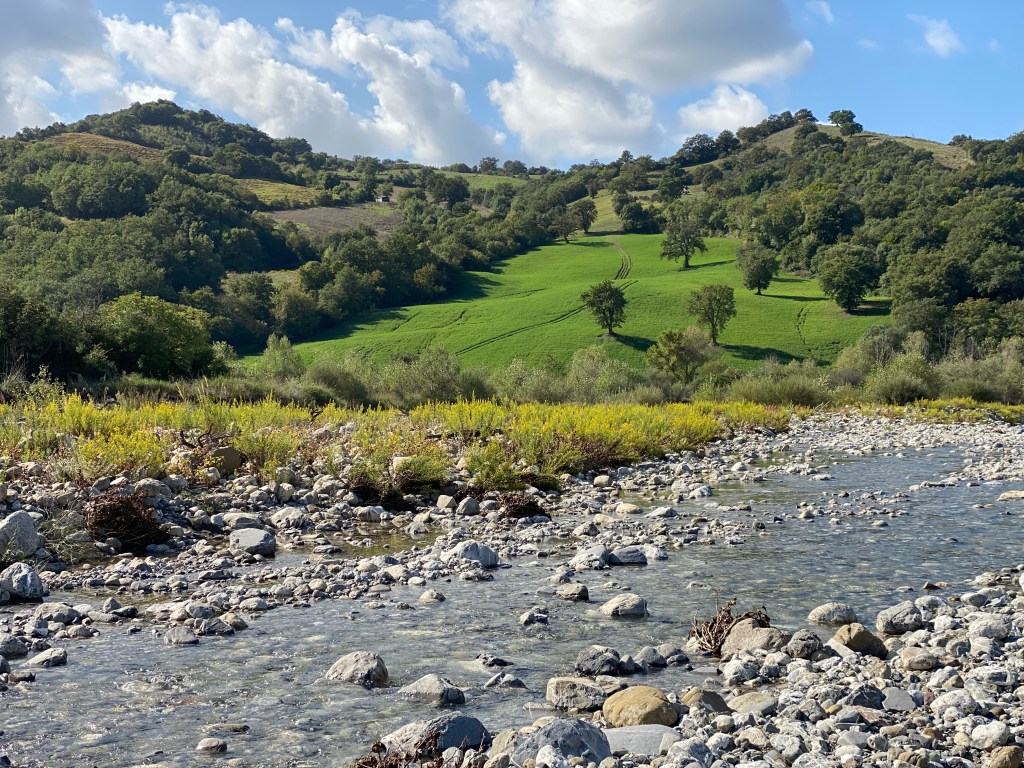
However, not all memory places are man-made. In fact, some of the most profound memory places are natural—forests, rivers, mountains—landscapes that resonate with the rhythms of human history and our shared ancestral experiences. These environments ground us, acting as silent witnesses to the passage of time and reminding us of where we come from. As humans, our connection to nature runs deep. Whether through myth, cultural memory, or lived experiences, these natural places stir within us an awareness of our roots. The whisper of the wind through the trees or the flow of a river carries echoes of ancient traditions, long-lost practices, and our relationship to the earth.
In some cases, these natural places themselves become monuments. A sacred grove, for example, can evoke collective remembrance of the spiritual or cultural practices tied to it, just as powerfully as a man-made shrine. The woods that surrounded ancient sanctuaries, such as those dedicated to Asclepius in Greece or the mysterious forests of the Etruscans, served as liminal spaces—thresholds between the physical world and the divine. These places held memory in the form of ritual, invoking not just personal or local identity but a sense of belonging within the wider cosmos.
As archaeologists, our work often focuses on deciphering these memory places, whether human-built or natural. Excavation of monumental sites reveals the layers of meaning attached to them across time, showing us how generations redefined the same physical spaces to serve new political, religious, or social agendas. Yet our exploration should extend beyond the stones. The landscape surrounding these monuments—the untouched forest near an ancient ruin, the river winding by a forgotten city—also tells its own story. It speaks of the people who lived, worked, and worshipped there and of the long-standing relationships between humans and their environments.
By understanding both the physical monuments and the natural landscapes they inhabit, we tap into a more decadent fabric of memory that intertwines the human-made and the natural, historical, and ancestral. Whether standing tall in stone or rooted deeply in the earth, these memory places continue to remind us not only of our history but of our place in it—where we belong in the long continuum of time.
 Alessandro Sebastiani
Lascia un commento