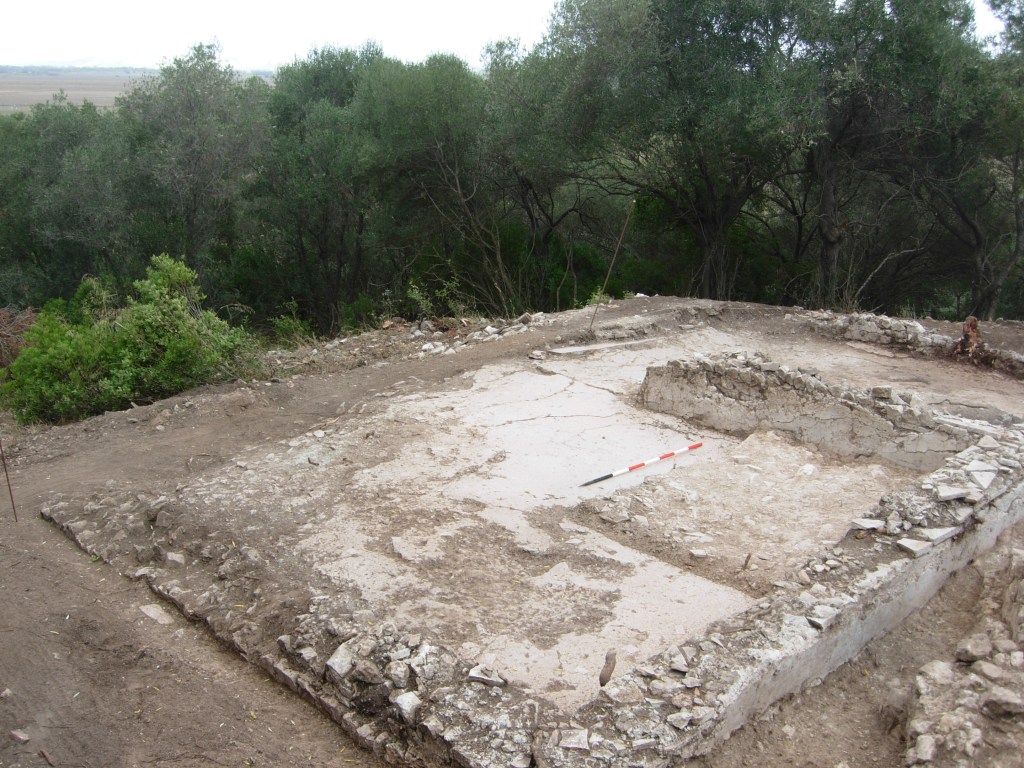
The sanctuary of Diana Umbronensis, in the Maremma near Alberese, is one of the most evocative places where archaeology and memory meet. The excavations started in 2009 and continued until 2011, involving more than eighty students in three campaigns. Together, they brought back to light a sacred space that was formerly at the center of the religious and territorial life of the Roman city of Rusellae.
At the heart of the sanctuary’s history is a tiny shrine built in the early 2nd century BCE. From this modest beginning, a sanctuary complex quickly developed, complete with ritual and ceremonial spaces. Votive offerings were carefully deposited and kept near the goddess’s statue, and a monumental cistern provided water to sustain the sacred rituals. The sanctuary grew in importance and dimension until the reign of Commodus, and then decreased in dimension because of the economic decline of central Italy in the Antonine period. Nevertheless, it remained an active center connected with sea and trade routes along with settlements at Umbro and Spolverino.
By the mid-4th century CE, the place was already deserted and served as a cemetery. It was the imperial decree of Thessalonica in 380 CE, banning the ancient cults, which brought about its systematic destruction. Yet the place was not abandoned. Votive offerings continued to be left in the ruins, bearing witness to the continuity of ritual practice. The statue of Diana herself was smashed in the temple precinct, its broken fragments noticeably left where any visitor to the empty shrine would notice them.
Forgotten to official memory, the remains then functioned as a modest shelter. A little, temporary home stood up among the collapsed walls, its inhabitants still trading in Mediterranean and paying in Byzantine coins. Progressively, the forest reclaimed the area. In medieval times, however, the big cistern was still conspicuous enough to be chosen as a place to conceal human corpses—an event that continues to be puzzling to the present day.
The sanctuary’s past re-emerged only recently. In 2005, the lucky finding of a dedicatory inscription returned the site to the limelight, prompting new excavation campaigns. What emerged was more than a sanctuary: it was a palimpsest of centuries, where memory, ritual, and abandonment built upon one another.
The sanctuary of Diana Umbronensis continues to be a powerful witness to the ways in which sacred landscapes can shape—and be shaped by—human communities over time. Its rediscovery restores to us a place of both pilgrimage and passage, where the echoes of ancient ritual continue to sound through the Tuscan countryside.
 Alessandro Sebastiani
Lascia un commento