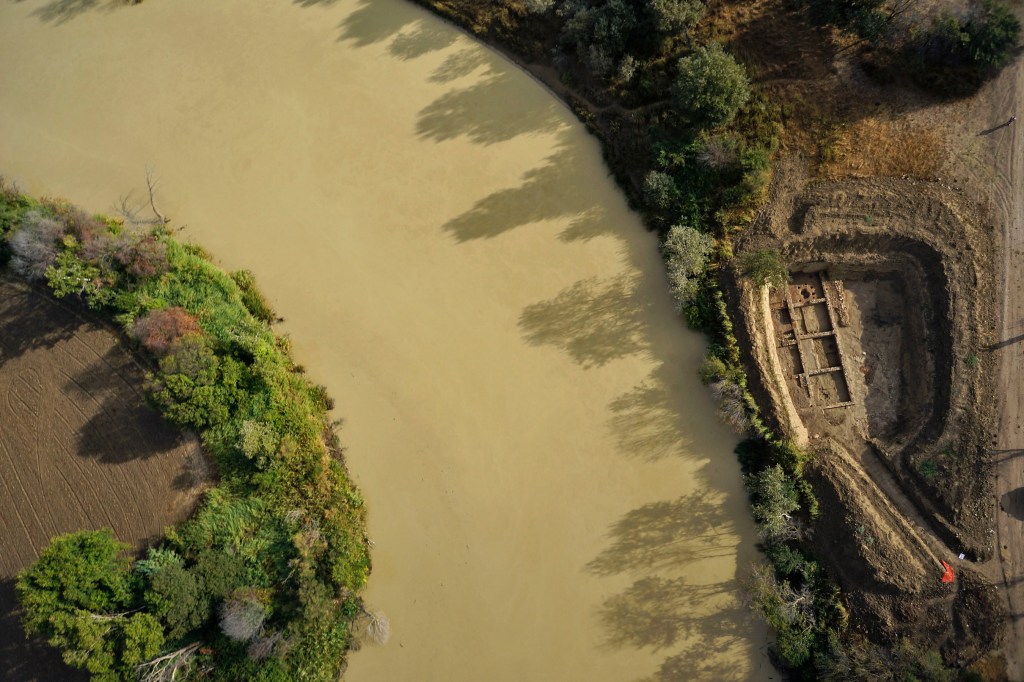
Between 2010 and 2014, the Alberese Archaeological Project carried out excavations at Spolverino, the second of three sites investigated within the Parco della Maremma, alongside the sanctuary of Diana Umbronensis at Scoglietto and the riverside settlement of Umbro Flumen.
The site presented significant logistical difficulties. Located near the last bend of the Ombrone River, it lay beneath more than two meters of alluvial deposits. Paradoxically, this natural burial preserved the structures in exceptional condition, allowing us to explore several rooms of the complex with remarkable clarity.
Built during the reign of Domitian and occupied until the mid-fifth century CE, Spolverino revealed itself as a central late Roman manufacturing hub. Excavations uncovered evidence for the recycling of metals and glass, workshops for bone working, and an extraordinary assemblage of cultural material. Among the finds were over 900 coins, now under study by a research team from the University of Rome Tor Vergata.
Strategically situated along the ancient via Aurelia vetus and close to the so-called Ponte del Diavolo, Spolverino speaks to the resilience of central Italy’s economy after the agricultural crisis of the Antonine age. Far from being a marginal site, it demonstrates how local communities adapted and thrived through specialized craft production and long-distance connections.
Following its abandonment in late antiquity, Spolverino did not fall silent. The site was repurposed first for lime production and later as a burial ground during the Lombard period, adding new phases of use onto its already complex history.
 Alessandro Sebastiani
Lascia un commento