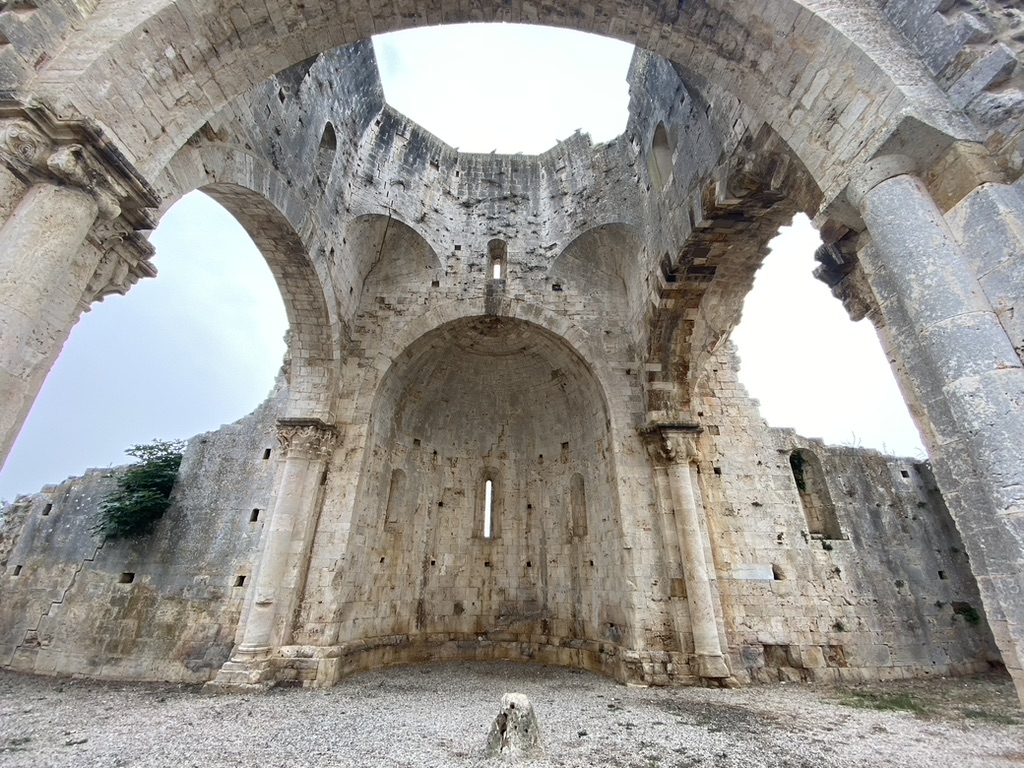
The dilapidated church of the monastery of San Bruzio, nestled within an olive grove at the slopes of the village of Magliano (Grosseto, IT), has piqued my interest over time. Gradually transitioning into a tourist destination, it attracts visitors intrigued by the medieval remnants of the apse area amidst the verdant landscape. Contemplating its origins raises questions regarding its potential emergence as a focal point for the population subsequent to the abandonment of the nearby colony of Heba. Future systematic research may provide comprehensive insights into the site’s historical development.
Today, what remains is a picturesque panorama of ruins, featuring the exposed octagonal drum over the altar, portions of the transept, and the craftsmanship evident in the capitals supporting erstwhile architectural features. Notably, these capitals exhibit striking resemblances to the ornamental motifs found in San Rabano, Sant’Antimo, and the Abbey of the Ardenghesca. Furthermore, one can discern the nave of the religious complex, subject to stratigraphic investigation by the Superintendence in previous years.
This place exudes an aura of mystique, enveloped within an almost fossilized environment, offering distant views of Magliano’s sixteenth-century walls. The journey may continue towards San Donato, where vestiges of an Etruscan necropolis dating back to the 7th century BC endure, enriching the region’s historical palimpsest.


Rispondi