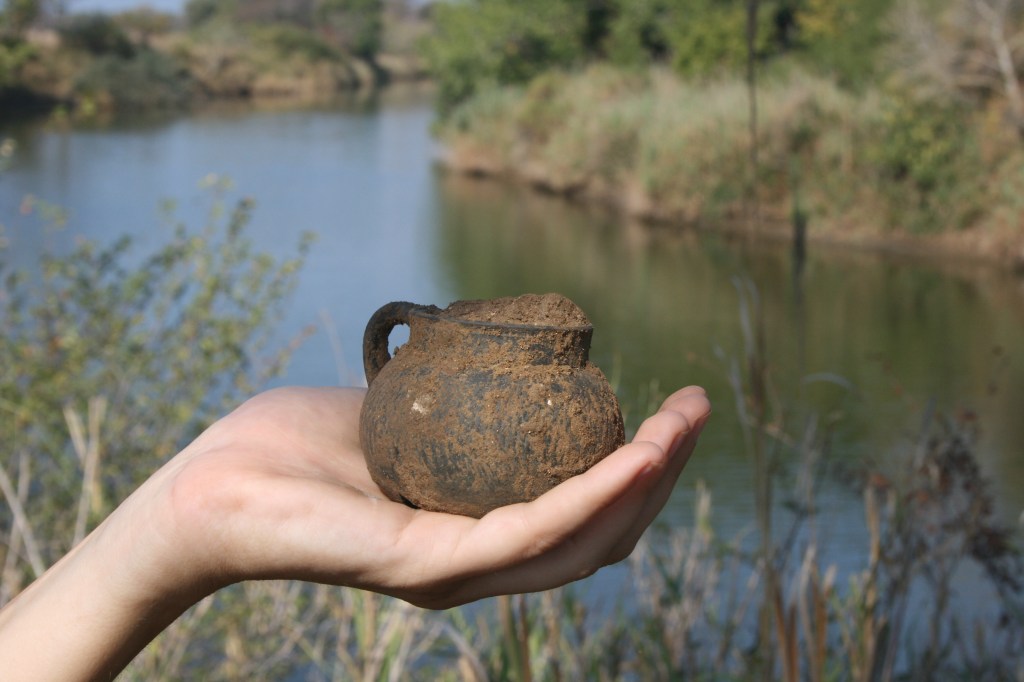
Between 2011 and 2014, my colleagues Elena Chirico, Matteo Colombini, and I conducted excavations at Spolverino (Alberese, GR), uncovering evidence of what was once a bustling manufacturing district. In 2012, we made a fascinating discovery: collective kitchens dating from the late 2nd century CE and in use until the mid-5th century CE, offering unique insights into ancient communal dining and food preparation.
The room was filled with an impressive range of kitchen vessels, from cooking pots to drinking cups, all in a remarkable state of preservation. This condition is due to over two meters of alluvial clay that covered the site, effectively sealing and protecting the vessels for centuries.
One particularly fascinating feature was an intact lararium, a household shrine found in a corner, complete with votive deposits. This suggests that those using the kitchen engaged in ritual practices, likely seeking blessings for their meals or protection for the shared space. The presence of the lararium highlights the interplay between culinary and spiritual practices in daily Roman life.
The discovery of these collective kitchens adds to our understanding of Roman culinary customs, particularly in an industrial context. These shared cooking areas might have served workers or travelers, where practical and spiritual needs met. This site gives us a vivid glimpse into how communal and religious practices blended in the Roman world.
Read more here: Sebastiani A. 2014. Spolverino (Alberese – GR). The 4th Archaeological Season at the Manufacturing District and revision of the previous archaeological data, in Journal of Fasti Online


Rispondi